Showing posts with label book:non-fiction. Show all posts

Monday, October 5, 2015

Review: Tiger Heart

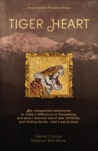
Tiger Heart: My Unexpected Adventures to Make a Difference in Darjeeling, and What I Learned about Fate, Fortitude, and Finding Family Half a World AwayTiger Heart: My Unexpected Adventures to Make a Difference in Darjeeling, and What I Learned about Fate, Fortitude, and Finding Family Half a World Away by Katrell Christie
My rating: 4 of 5 stars

Disclaimer: I received a free advanced review copy from the publisher via Netgalley.
"Today, our teacher told us about the number zero, which has no worth," she said.
"But put it next to another number, and it makes that number important. The more zeros you add, the bigger the number gets. So know that if you are feeling like a zero, you do have great worth with teamwork."

That quote basically sums up the entire message of the book for me. Katrell Christie's mission of bettering the lives of these girls in Darjeeling, India would be impossible without help.

I've heard of The Learning Tea before. I'm a bit of a tea obsessive, with cupboard overflowing with the dried leaf. I remember finding the website at some point, looking at the tea and considering buying some. I ended up not, only because I am not a fan of darjeeling tea, finding it lacking the depth and subtlety of flavor that I find in teas from China, Japan, and Taiwan. But The Learning Tea stayed somewhere in the back of my mind and when I saw this book on Netgalley, I immediately requested it.

Tiger Heart is part memoir, part call to action, part marketing material, and part feel-good "find the good in the world" missive. It's deceptively simple, with clear writing and short chapters interspersed with motivational quotes from well-known thinkers or writers. On the surface, the book is simply Christie's journey that led her to create The Learning Tea, and where The Learning Tea is today. But it's more. It's also the story of one person making a difference -- but not on her own.

I think that's the most powerful message in this book. Unlike another international development NGO founder who was outed to be a fraud after writing several best-selling books, Christie never portrays herself as the hero, single-handedly moving mountains. She's honest in what she doesn't know, what she had to learn. She's humble in her quest, focusing on helping the individuals she can. And she's upfront with her failures.

She could have very easily sensationalized her story, and it was a bit of a shock when I came across this:
I’ve made it through two armed robberies, one attempted carjacking at gunpoint, one knife holdup, and one hijacked train. I was smuggled through a political war zone in the hatchback of a car covered in burlap. I’ve tossed on a burka to be able to ride the train by myself. Throw in a handful of death threats. And then there’s bullying from people who don’t want my low-caste scholars to take seats away from their rich kids at school.

Because Christie, while making it clear throughout the book that it was incredibly difficult and draining to do what she does, never up until that point toward the end of the book, mentioned it was also dangerous.

But the story wasn't about her and her being the hero. It's about the girls who are being helped, and India.

View all my reviews

Thursday, September 17, 2015

Review: The Only Woman in the Room by Eileen Pollack

The Only Woman in the Room: Why Science Is Still a Boys' ClubThe Only Woman in the Room: Why Science Is Still a Boys' Club by Eileen Pollack
My rating: 4 of 5 stars

Disclaimer: I received a free advanced review copy from the publisher via Netgalley.

The description for this book is a bit misleading. The first half is Pollack's memoir of her own experiences as a student from childhood in public school in a predominantly Jewish area through college at Yale as one of the few female physics majors. The second half of the book is more in line with what I had been expecting given the description, and includes anecdata from other women who Pollack had known or interviewed from her own generation and the later generation of female science majors and scientists, as well as recaps of interviews with her former professors and teachers who we had met in the first half of the book.

This is a deeply personal story for Pollack, but at the same time it is also deeply personal for every girl who thought she wasn't smart enough, or every woman who decided to drop out of a science major, or every student who didn't even try for a science degree in the first place. This book was deeply personal for me.

Pollack's experiences are not every woman's or minorities' experiences, but they are similar enough that many can relate. One of my criticisms of this book is Pollack's weakness in connecting women's experiences with the similar experiences of minorities and economically disadvantaged students. She does mention that several times, but it is definitely a message that can be strengthened. Towards the end of the book, Pollack noted that some students, even if they enter into college at the top of their high school graduating class, find themselves floundering and behind other students because they were not privileged enough for their schools to offer certain courses. I wish Pollack had highlighted that more because it's a problem that systemically places students from under-served, poorer schools at a disadvantage in college.

I write this review the day after a 14-year-old Muslim boy with brown skin was detained by his school and arrested for bringing in a homemade clock to show off to his science teacher, which another teacher reported as a bomb. That is an extreme case of the educational culture discouraging a minority from entering a STEM field, but it highlights the challenges that some students face by virtue of their sex or ethnicity.

Pollack's story is an important one, and both its strength and weakness is its reliance on anecdotes (what I referred to as "anecdata" earlier) from her own experiences and gleaned from interviews or missives with other women or minorities. She does mention the results of a few studies of bias against women in STEM, but the bulk of the book are anecdata rather than empirical controlled studies. The anecdata bring the problems to life in a way that pure numbers don't, yet at the same time anecdotes are easy for those in the sciences to discount because they are not data (hence why I have been referring to them as "anecdata" because, well, it can be argued that the plural for anecdote is data).

Given the larger conversation that has been on-going for the past few years of women in the sciences, and the blatant misogyny that I keep running up against from big names (Google "Richard Dawkins women"), The Only Woman in the Room is an important book, and very timely. Remember in June when Nobel Laureate in Physiology or Medicine Tim Hunt said at a science conference in South Korea, “Let me tell you about my trouble with girls. Three things happen when they are in the lab: You fall in love with them, they fall in love with you, and when you criticize them they cry”? Or last November when European Space Agency Rosetta Project scientist Matt Taylor gave public interviews after the Philae space probe landed on a comet while wearing a shirt covered in nearly naked women? It is heartening, I guess, that all of these incidents have lead to huge public outcries and public apologies (in the case of Taylor) or firings (in the case of Hunt). A decade or two earlier, they would have been the status quo.

I hope that Pollack's book inspires change in STEM education at all levels, and I hope that it also inspires women to pursue STEM educations and careers.

View all my reviews

Friday, September 4, 2009

Book Review: Why Evolution is True

Why Evolution is True by Jerry A. Coyne

Book description: What is evolution? What proof is there that it exists? Jerry Coyne answers those questions in a very accessible and interesting way. He explains exactly what evolution is (and isn't), and then provides specific examples of proof that evolution exists.

Eighty-three years have passed since Scopes v. State, also known as the Scopes Monkey Trial. John Scopes, a high school science teacher, was found guilty of teaching evolution. However, due to a technicality on appeal, he was never actually punished.

But surely we have moved beyond that, right? Coyne's book starts out with some personal reflections on Kitzmiller et al. vs. Dover Area School District et al: a modern day Scopes monkey trial in which the Dover, PA school district board passed a resolution requiring biology teachers to read a short statement offering intelligent design as an alternative theory to evolution. Some outraged parents sued, and thankfully, the judge ruled in their favor. That case was in 2005.

In 2009, band members of Smith-Cotton High School (Sedalia, MO) were forced to return tee-shirts that were promoting their fall program because the shirts depicted the evolution of man. (The theme of the program was "Brass Evolution".)

Obviously, evolution is still a contentious issue. Creationism has been renamed "intelligent design" and is still being pushed to be offered as an "alternative" in parts of the country. In his book, Coyne does an admirable job in not only defending evolution but, by implication, exposing intelligent design's lack of foundation.

He begins by explaining that a scientific theory is much stronger and unimpeachable than laymen consider a theory. The "theory" of evolution is commonly accepted in the scientific community as scientific fact. There has been no evidence to contradict it, despite creationists assertions to the contrary (he also debunks a number of those in his book). And he points to evidence that not only did the planet and all plants and animals on it evolved, but that humans did as well.

I find evolution absolutely fascinating, and I am constantly amazed when I run into someone who turns a blind eye to all the evidence that it happened and that it's still happening today. I love learning how different species evolved in a community and formed relationships with other species (predator-prey, symbiotes, etc.), and within species.

Evolution has always been wrapped up in my head with the environment thanks to my college course "Ecology & Evolution" - but it does make sense. If you're learning about ecology, learning about how said ecology came about can be extremely enlightening in understanding why things are they way they are.

Just call me an evolution fangirl.

Thursday, September 3, 2009

Book Review: Bird Flu

Bird Flu: A Virus of Our Own Hatching by Michael Greger, M.D.

Book description: Dr. Michael Greger walks the reader through the history of avian flu and its implications for us today. The threat of avian flu can be directly linked to industrialized animal agriculture which weakens the animals' immune systems, and threatens our own health.

If you are not scared shitless at the thought of a pandemic flu, you're not paying attention. While the focus has shifted from avian to swine flu, the information in this book is no less relevant. Birds, pigs, and humans form a close-knit disease vector triangle. It is strongly suspected that the 1918 influenza epidemic was an avian flu that made the leap to humans through domesticated pigs.

Human domestication of animals has had enormous benefits throughout history. Unfortunately, it also has its downsides. As humans and the animals they domesticated lived together, their immune systems became intricately linked and disease transmission became easier. Viruses by their very nature can mutate very fast. Thankfully, the avian influenza virus has not developed the mutation necessary to cause human-to-human transmission.

However, I have heard a number of epidemiologists say it is only a matter of time.

Dr. Greger lays out how intensification of animal agriculture has exacerbated the threat. By moving towards confined animal feeding operations (CAFOs), animals are placed in closed proximity to each other and have suppressed immune systems due to high stress levels and poor living conditions. He argues that when the flu pandemic comes, it will be due to Western agricultural methods. He makes a very convincing case -- even after I learned he works for PETA. But Bird Flu is meticulously researched and I've read other articles and books about influenza that back up what he says.

Just because he may have an axe to grind, that does not make Greger's thesis any less true.

But you be the judge. Read it for yourself -- the entire book, including endnotes, is available online for free.

Wednesday, December 10, 2008

Book Review: Farm Sanctuary

Farm Sanctuary: Changing Hearts and Minds About Animals and Food by Gene Baur

Book description: Leading animal rights activist Gene Baur examines the real cost of the meat on our plates -- for both humans and animals alike -- in this provocative and thorough examination of the modern farm industry.

Baur has written a book that is part memoir and part exposé of the factory farm system's treatment of animals. It is short but packs a lot in. Not unexpectedly, the author has frequent forays into "preachiness" which if you are not of a like mind can get tiring. (To be honest, it can get tiring even if you are.) Unfortunately, I doubt that many who are not like-minded will ever read this book.

Full disclosure: I am a vegetarian. I am not a vegan. While this book made me carefully consider veganism, in the end I decided against it but vowed to buy my eggs and dairy carefully to minimize my support of factory farms.

Confined animal feedlot operations (CAFOs) are one of the truly despicable inventions of the industrialized agricultural system. It is absolutely appalling and the fact that the USDA not only subsidizes it but encourages it infuriates me. Animals are sentient beings. They feel pain, fear, loneliness, and anger as well as happiness. Anyone who has ever owned a pet can tell you that. Yet, for some reason, because these animals are used for food they do not deserve the basic dignities that should be their right.

Treat a dog or a horse the way pigs are treated and the Humane Society is called. Yet here are billions of animals who give their lives so that we may eat in the manner we want and we treat them not with respect, but without thinking at all. Humans have become so far removed from the food supply chain that it is very hard to connect what is on our plates to what occurs on the farm. The idyllic picture of the family farm, cows peacefully grazing in the field next to the vegetable garden, is unfortunately no longer the norm. Through careful advertising, though, largescale agriculture tries to perpetuate that image.

It has been said that if slaughterhouses were made of glass most people would stop eating meat. But due to the high security around such places (and other aspects of CAFOs) most will never see how the cows that became that hamburger died. My coworker had the misfortune to wander onto the kill floor of a slaughterhouse. She is now a vegetarian.

Why did I decide to not go vegan? I have known what occurs in CAFOs and in slaughterhouses for a long time. Nothing in this book shocked me, though it did touch me. I did not become vegetarian for moral reasons. I have no problems with killing invasive species that are damaging the environment. I do have a problem with the way we treat animals in this society. If every farm in the country was Polyface Farm, I might even eat meat again, but unfortunately they are not. There were some American Indian tribes that thanked the spirits of animals before they were killed because the animals gave their lives so the people could live. Perhaps we should return to that mentality. The sheer waste that occurs in industrial agriculture should make every environmentalist outraged -- not least, the waste in lives that are thrown away as acceptable losses to the system, and never even make it into the food supply.

Sunday, November 16, 2008

Book Review: Stirring It Up

Stirring It Up: How to Make Money and Save the World by Gary Hirsberg

Book description: Gary Hirsberg is the founder and CE-Yo of Stonyfield Farm, a company that proved it was profitable to operate sustainably. Hirsberg outlines his own journey in Stirring it Up and highlights other success stories, from Wal-mart to Patagonia, of companies who have embraced a sustainable product, production supply chain, work environment, and culture -- and made it profitable.

I scoffed when I reached the section where Hirsberg points to Wal-mart, the most hated of retail giants, as an example of a company that was working to "save the world." It took me a while to reconcile my view of Wal-mart -- the blight upon rural America and destroyer of the small mom-and-pop stores -- with the Wal-mart Hirsberg described. I had to remind myself there were two sides to every coin. I still find it very hard to believe that Wal-mart's journey to being green was motivated by anything other than . . . well, green, as in money.

And it is true -- being green can save you money. It goes back to the three 'R's of environmentalism we memorized all those years ago. Reduce. Reuse. Recycle. Those were the tenents of the do-it-yourself environmentalism. Unfortunately, the first two seem to have been forgotten. They were unpopular in that they reminded us of the need to change our gluttonous and spoiled lifestyles. But, as Hirsberg showed with examples throughout his book, reduce and reuse can sure conserve more than just raw materials. For a business, the bottom line is hugely important.

While I am a believer in green business, I doubt it can save the world because it ignores one of the root causes of most if not all environmental problems: consumption. Green business is still firmly rooted in the capitalist framework and in the free market economy. The belief that the free market can fix everything is somewhat of a sacred cow in the United States. I agree that the market is a very powerful entity but do not think it is the answer for all the ills in the world, mainly because the free market without government intervention will most likely not take into account the externalities into the price of the product. And the free market is still based on consumption. Whenever we buy something from the store, we are directly contributing to greenhouse gas emissions, resource depletion, and landfill waste. Buying "green" should also mean buying less, and reusing what you can (either yourself and giving to others) in addition to recycling.

Still, overall, a great thumbs-up to Hirsberg and other green business entrepreneurs out there.

Friday, September 5, 2008

Book Review: Plundering Paradise

Plundering Paradise: The Hand of Man on the Galápagos Islands by Michael D'Orso

Book description: Mention the Galápagos Islands to almost anyone, and the first things that spring to mind are iguanas, tortoises, volcanic beaches, and, of course, Charles Darwin. But there are people living there, too -- nearly 20,000 of them. A wild stew of nomads and grifters, dreamers and hermits, wealthy tour operators and desperately poor South American refugees, these inhabitants have brought crime, crowding, poaching, and pollution to the once-idyllic islands. In Plundering Paradise, Michael D'Orso explores the conflicts on land and at sea that now threaten to destroy this fabled "Eden of Evolution." (from back cover)

Most people, when they think of the Galápagos, do not realize that there is a lively and sizable human population sharing the Islands with the famous turtles, finches, and seals. D'Orso, who readily admits to being more interested in humans than flora and fauna -- no matter how unique or scientifically significant, sets out to explore the lives of these people who make their homes in one of the world's most famous naturalist spots.

The picture he paints is a bleak one. The Islands are owned by Ecuador, which is perpetually plagued by economic, political, and civil unrest. A banana and oil economy, the political leaders change frequently but the corruption stays consistent. The Galápagos faces internal and external pressures on its natural resources. The growing population who come from the mainland in search of a better life harvest the Islands' sea cucumbers. Fisherman, both Islanders and not, are drawn to the Islands' rich sea life. With an overworked and stretched-thin Park staff, enforcement is patchy and further hindered by a corrupt political system that refuses to prosecute poachers. Tourists, too, play their role - the growth of tourism to the Galápagos has led to the growth of the tourist industry, which while provides very welcome money to the islands, also promotes development and further migration from the mainland.

D'Orso provides stories on the lives and history of individuals who call the Galápagos home. There is desperation, hope, resentment, anger, and resignation at the state of life on the Islands.

Because it is written in 2003, much of the information is out of date. The organizational structure and writing style also leaves much to be desired. Despite these shortfalls, Plundering Paradise is as far as I know the only book to date about the humans of the the Galápagos, and invaluably places these near-mythical islands firmly in the real world and susceptible to politics, economics, greed, and desperation.

Friday, June 6, 2008

Book Review: Ecological Economics

Ecological Economics: Principles and Applications by Herman E. Daly and Joshua Farley

Book Description: This is the definitive entry-level textbook for ecological economics, co-written by one of the leaders in the field, Herman Daly. This is a must read for anyone who is interested in the nexus between economics and the environment. Unlike neoclassical economics, ecological economics starts with the premise that the human economy exists in a finite world with limited resources and limited sinks.

There is a lot more to the field of ecological economics than can every be explained in one tiny blog post. I had the wonderful opportunity to take a class with Herman Daly. His ideas will one day revolutionize the entire economics field, I believe. Ecological economics is first and foremost an interdisciplinary field, taking not just economics, but sociology, policy, philosophy, and biology, to create something that is realistic and makes sense.

Daly and Farley critique neoclassical economics, the economic theory that is most taught today. They argue that economics should follow basic physical laws like the law of thermodynamics, and that an economic system should be both equitable and efficient, and that efficiency should take into account social values.

A basic knowledge of economic theory is necessary to fully understand some of the book's concepts, but the majority of it can be read by the layman, in my opinion. Give it a try -- you might find you like it. This is economics as it should be.

Sunday, May 18, 2008

Book Review: Priceless

Priceless: On Knowing the Price of Everything and the Value of Nothing by Frank Ackerman and Lisa Heinzerling

Book description: As heartless as it sounds to express in dollars and cents the value of human lives, health, or the environment, cost-benefit analysis requires it. More disturbingly, this approach is being embraced by a growing number of politicians and conservative pundits as the most reasonable way to make a variety of policy decisions regarding public health and the environment. By systematically refuting the ill-advised economic algorithms and illogical assumptions that cost-benefit analysts flaunt as fact, Priceless tells a "gripping story about how solid science has been shoved to the backburner by bean counters with ideological blinders" (In These Times).

I have to thank Herman Daly for assigning this book for his class. I doubt I ever would have discovered it without him. In their book, Ackerman and Heinzerling critique the political and economic impetus to assign a price tag to everything -- even a human life (which is, incidentally, $6.1 million, according to the U.S. EPA).

The problem with our current system is the fact that "money talks." In order to play on the same field as the business interests, environmentalists and advocates have been forced to place economic value to things that should be without price. The wonderful institution in the Executive Branch, the Office of Management and Budget (OMB) demands it, even. In order to leverage political change, a number must be given. And you can be sure that the people on the other side of the debate have their own numbers to wave about -- though it seems that lately, they have been relying on the ambiguous "it will hurt the economy" argument.

So this had led to a system in which things that have infinite value are given a price tag. The authors note this phenomenon with not only a human life, which extends to human health, but natural resources and safety. So if the price tag associated with an action is more than the price tag given to the benefits, then said action is not cost effective and OMB can say it should not be done.

Pretty handy way of arguing what not to do, ain't it? Who cares about health, safety, and the environment anyway, when it's not cost effective to do so?

Something else to ponder -- if a human life is worth 6.1 million dollars, then theoretically, a murderer could pay $6.1 million and get off scot free.

Saturday, May 3, 2008

Book Review: The Omnivore's Dilemma

The Omnivore's Dilemma: A Natural History of Four Meals by Michael Pollan

Book description: Michael Pollan takes readers through the history of four different meals from farm to table: industrialized fast-food, industrialized organic, local, and one he obtained himself through hunting and gathering.

The more industrialized, urbanized, and commercialized a society is, the greater is the disconnect between the consumer and where exactly his food comes from. In the Western world, the majority of us get our food from a grocery store where the meat is handily dismembered and sealed in slick plastic, milk is delivered in cartons, and we can buy entire meals in a box. We never see the animals that provide us with the milk, eggs, and steak we consume and we never harvest our own fruits and vegetables. It really is no wonder that when I was a child I could not connect the chicken on the TV with the chicken nuggets I loved -- in fact, I still have trouble with that today.

Pollan's journey to discover the origins of what we eat was at times horrifying, at times inspirational, and completely fascinating. As a vegetarian I felt I already had a fairly decent understanding of what exactly enters our food supply chain. I knew about the cruelty of factory farms and the overabundance of corn in our processed foods. As an environmentalist I understand the reasons for wanting to eat lower down on the food chain and more locally. Pollan's book reaffirmed this, as well as adding previously unseen facets to my understanding.

The book lays out the facts and what he saw with, in my opinion, very little pushing toward any one conclusion. (That he saves for his next book, In Defense of Food.) But I came away with a much deeper respect for food in general and the realization that if I wanted to be socially and ecologically conscious with my diet, perhaps even Whole Foods wasn't the way to go because while organic, it is by no means local.

I will definitely be picking up In Defense of Food because I am very interested in Pollan's thoughts on this subject. In the meantime, my community is finally getting a farmers market so I can now buy local without even getting into a car!

(As an aside, I had the great fortune to hear Joel Salatin of Polyface Farm, who featured heavily in the eating local section of The Omnivore's Dilemma, comment at a federal advisory committee. He was extremely passionate as well as a very nice man to speak to.)